Innovation and Expertise

ETABLISSEMENT PAU LACQ
At the CSTJF in Pau, TotalEnergies is developing ARCS, a project designed to standardize, automate, and robotize the test benches used to re-create small-scale oil reservoirs in the laboratory. Combining petrophysics, imaging and robotics, this new equipment helps reduce lead times and paves the way for a new generation of experiments, as part of a new growth surge. Michel N’Guyen, an R&D engineer at the CSTJF in Pau gives us the lowdown.
TotalEnergies draws on research and innovation Company-wide to reconcile industrial performance and the reduction of its environmental footprint. Within this context, the experimental capacities of laboratories play a key part in increasing our understanding of complex systems, making models more reliable, and helping to make informed technical choices in the long term. The ARCS project, which stands for Automated Robotic Coreflooding System, is in keeping with this trend.
Michel, what is your role at the CSTJF?

Michel N’guyen - MN: I started working in Pau in 2003 as a technician in the L5 lab devoted to petrophysics. The team comprised mainly physicists and needed someone who could provide complementary expertise in chemistry for fluid and reservoir experiments. The lab is indeed in charge of re-creating – at core scale and in reservoir conditions – the dynamics between fluids in place and injected fluids. In other words, we take subsurface rock samples, reinject fluids, recreate pressure and temperature conditions, and then observe how the different fluids move through the rock in coreflood experiments.
What are you seeking to understand through this type of experiment?
MN: We’re trying to improve our understanding of production mechanisms. When we inject a fluid into rock, we monitor the different reactions that take place: how do water, oil and gas move, how do they interact, how effective is the coreflooding process, and ultimately, what is the recovery rate at microscopic scale. Based on these experiments, we can then characterize recovery mechanisms. These are very long technical operations, as a study lasts around six months. The greatest difficulty? Working at high pressure and high temperature, at around 500 bars and a hundred or so degrees Celsius.
Among all the different experiments performed, I remember one where we were recreating a North Sea reservoir, that involved tests at 1,000 bars and 200 degrees. Extreme conditions to say the least!
At what point did your job move toward technical development and innovation?

MN: After starting out here, I soon developed a passion for laboratory techniques. First for chromatography, used to monitor fluid composition in real time. Then, for high-pressure/high-temperature equipment, especially syringe pumps, which can inject or push fluids into rock at very high pressures. And last but not least, imaging. To understand what is happening in the rock, you have to be able to see, or rather measure, what is inside it at all times – the water, the oil, the gas. To do so, we use X-ray and gamma-ray technologies among others. In 2016, I was offered a job that involved innovation and developing these techniques. I accepted straight away!
Was the ARCS project born in this context?
MN: Yes, that’s right. ARCS falls totally in line with TotalEnergies’ rationale for development, which involves improving methods, reducing study times, and making equipment more reliable. Our strong point at the CSTJF is that very few laboratories worldwide are able to perform this type of study in real conditions, with real rock, real hydrocarbons, the right pressures, the right temperatures, and advanced imaging techniques. There was only one slight snag: until now, our benches were very “prototypical”. They had been developed over time, with a lot of expertise, but they still required too many hands-on operations.
So, how has the ARCS project changed the lab’s way of working?

MN: The aim of the ARCS project is to standardize test benches as much as possible, as well as to automate and replicate them. We’ve even robotized them, particularly to load the rock samples on the measuring benches. It’s a real step forward in terms of health, safety and environment (HSE) as it means fewer handling operations for the experimenters. ARCS should be fully up and running in the fall of 2026. The lab will have six new benches for washing and characterizing rock samples as well as three fully automated coreflood benches.
What teams do you work with on a daily basis?
MN: We work hand in hand with many teams at the CSTJF, including the Corehouse team that scans, analyzes, samples, and archives the rocks. We also work alongside the other petrophysics lab teams, who are in charge of rock characterization. Among other things, they help us select the right samples. Lastly, we count on the “Fluids” teams, who analyze the hydrocarbons, the injection gases, and the samples taken on site.
All our research results are then passed on to the reservoir engineers so that they can “feed” their simulators to build or optimize field development scenarios.
What is the biggest scientific challenge awaiting the Company today?
MN: Data analysis, without a doubt. We continue to produce more and more physical measurements and images. The goal is to improve how we process and model these data, so that we can more clearly anticipate what’s happening in the rock. Artificial intelligence will of course play an increasing role, but we must nevertheless continue to rigorously verify the quality of the initial measurement.
What do you find the most thrilling in your job?
MN: I love the idea of being able to see the invisible! One of my specialties is the use of X-rays. Observing very small quantities of fluid in a rock without disrupting the experiment requires a great deal of precision. Many labs rely on contrast agents to make it easier to differentiate the fluids, but at the CSTJF we made the choice not to add anything. Contrast agents can indeed modify the physical chemistry of the medium observed and thereby skew the experiment.
Another thing I like is that our industrial issues resonate with those encountered in other business sectors, particularly the medical world. I’m very active in an association devoted to radiation protection and the use of X-rays, which means I'm regularly in touch with health professionals. In hospital, some patients have adverse reactions to contrast agents. Our research can therefore provide input for debate, inspire new approaches, and in return, benefit from experiments carried out in other disciplines. This is what makes this job so thrilling: we work on a highly specialized subject, but there are often way more crossovers than we could have possibly imagined!
TotalEnergies is a global integrated energy company that produces and markets energies: oil and biofuels, natural gas, biogas and low-carbon hydrogen, renewables and electricity. Find out more: Energy Transition | TotalEnergies.com
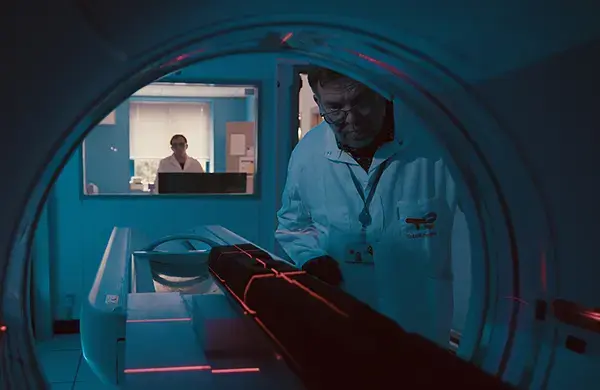
The TotalEnergies Corehouse, a true geological encyclopedia
At the Jean Féger Scientific and Technical Center (CSTFJ) in Pau, methodical studies and sampling of the huge collection of rocks from all around the world, contribute to TotalEnergies’ energy transition strategy.
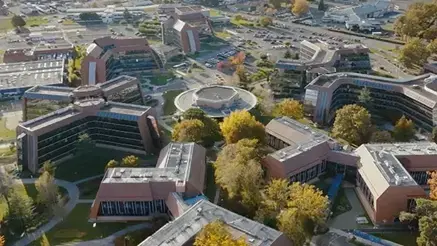
TotalEnergies Pau: driven by innovation
People, expertise, an ambition... a short video to give those who represent the collective dynamics in the TotalEnergies centers in Pau and in Lacq, an opportunity to express themselves.

SISMAGE-CIG: Geosciences solutions unique in the world
The Sismage-CIG platform based at the CSTJF centralizes a comprehensive range of tools used in geophysical interpreting, geological and reservoir modeling and subsurface analysis, among others. It is used by TotalEnergies’ geoscience and reservoir engineers to "interpret the invisible".