Innovation and Expertise

ETABLISSEMENT PAU LACQ
TotalEnergies, in partnership with Dell Technologies and NVIDIA, announced in May 2026 the signing of a contract for the design and installation of Pangea 5, its next high-performance supercomputer (HPC). Hosted at the Jean Féger Scientific and Technical Center (CSTJF) in Pau, southwestern France, Pangea 5 will multiply the Company’s computing power by six. Replacing Pangea 3, Pangea 5 will deliver greater energy efficiency than all previous generations.
A Significant Increase in Computing Power to Support TotalEnergies’ Projects
Thanks to this major increase in computing speed, Pangea 5 will enable broader deployment of advanced seismic engineering technologies such as Full Waveform Inversion (FWI), which significantly improve subsurface imaging accuracy and can reduce study execution times by half, supporting the Company’s strategy for low-cost, low-emission hydrocarbon production.
Pangea 5 will also support AI applications in Research & Development, notably by accelerating subsurface data interpretation through the integration of artificial intelligence into physics-based models capable of analysing vast datasets. It will also help meet growing digital requirements aimed at optimising computing times and enhancing the understanding of complex phenomena such as integrated power models.
Controlled Energy Consumption and CO2 Emissions
Pangea 5 will rely on specialised processors capable of performing large-scale parallel computations while offering greater energy efficiency than previous generations. At equivalent performance, Pangea 5’s energy consumption will be reduced by approximately 40%, while the energy consumption of its associated cooling system will be divided by five. The residual heat generated by the supercomputer will be recovered and reused to help heat the CSTJF buildings, which host more than 2,500 employees.
Pangea 5 is scheduled to be commissioned in 2027. Preparatory work has already started at CSTJF. Space is being cleared on site because, before the integration of Pangea 5, numerous operations need to be completed. In particular, multidisciplinary teams must ensure the continuity of Pangea 4 operations throughout the entire construction and installation phase.
Artificial intelligence and digital technology are strategic drivers of TotalEnergies’ energy transition. By increasing Pangea’s computing power sixfold, the Company is strengthening its leadership in high-performance computing.

HPC TotalEnergies: a journey into the heart of scientific computing
Elies Bergounioux, a High-Performance Computing Engineer based in Pau, is responsible for managing the performance of the company’s supercomputers and developing software to simulate complex physical phenomena in the energy sector.
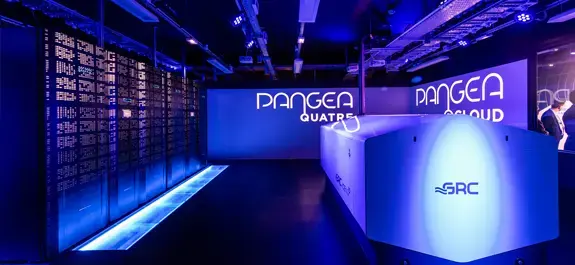
Pangea: Modeling, simulating, and making decision-making easier
In 2013, when TotalEnergies installed its first industrial supercomptuer at the CSTJF in Pau, it needed a name. Since the 1980s, all the Company’s computers were named after islands...
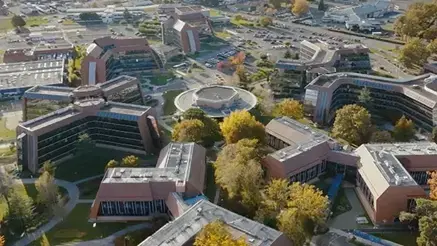
TotalEnergies Pau: driven by innovation
People, expertise, an ambition... a short video to give those who represent the collective dynamics in the TotalEnergies centers in Pau and in Lacq, an opportunity to express themselves.